JY-N95 Automatic Centrifugal Separator
Automated Centrifugal Separation for Industrial Process Fluids
Improve industrial fluid cleanliness through centrifugal separation and automatic solids discharge. The JY-N95 is designed for suitable industrial applications where process-fluid reuse and reduced disposable filter-media consumption matter.
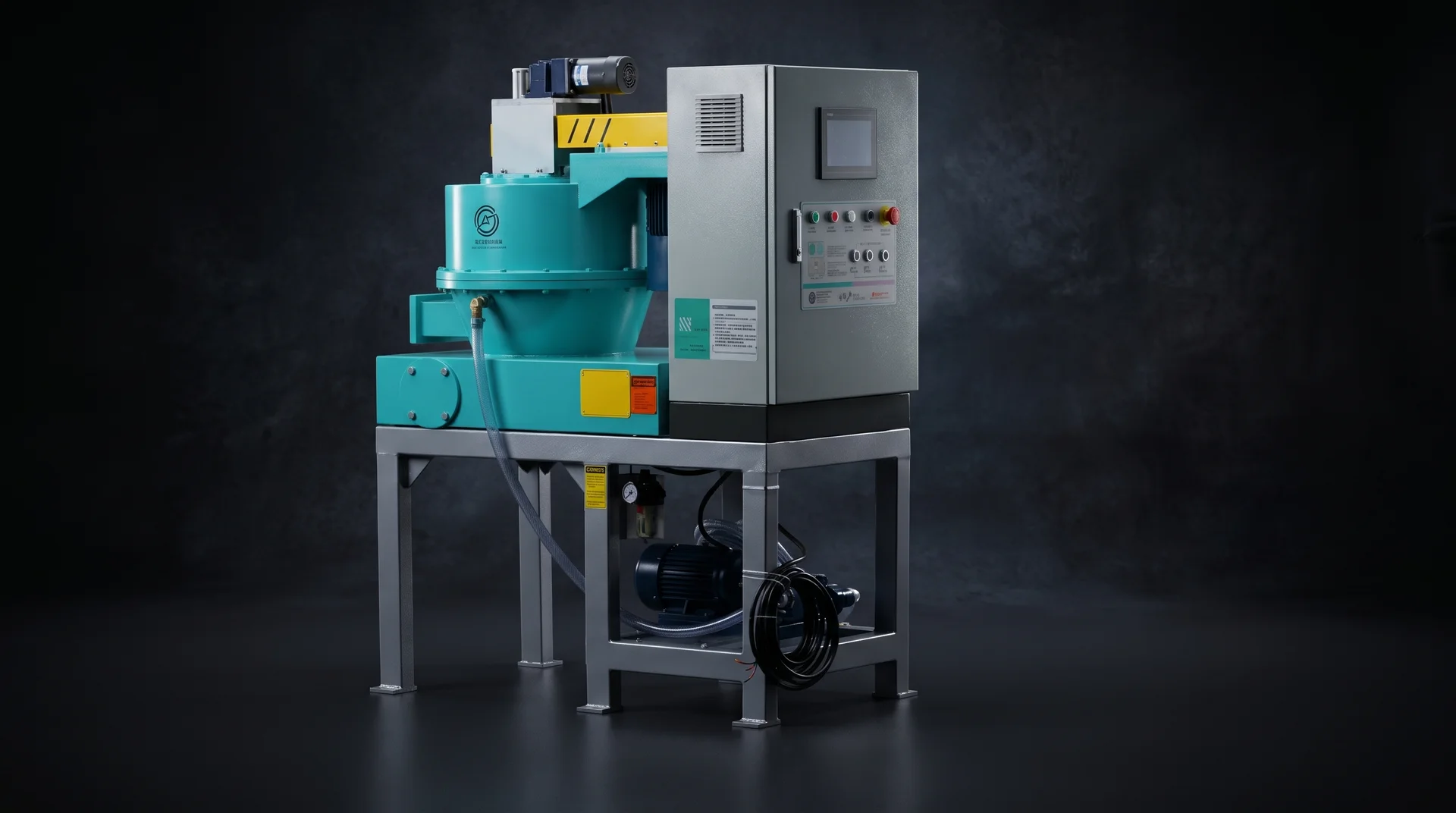
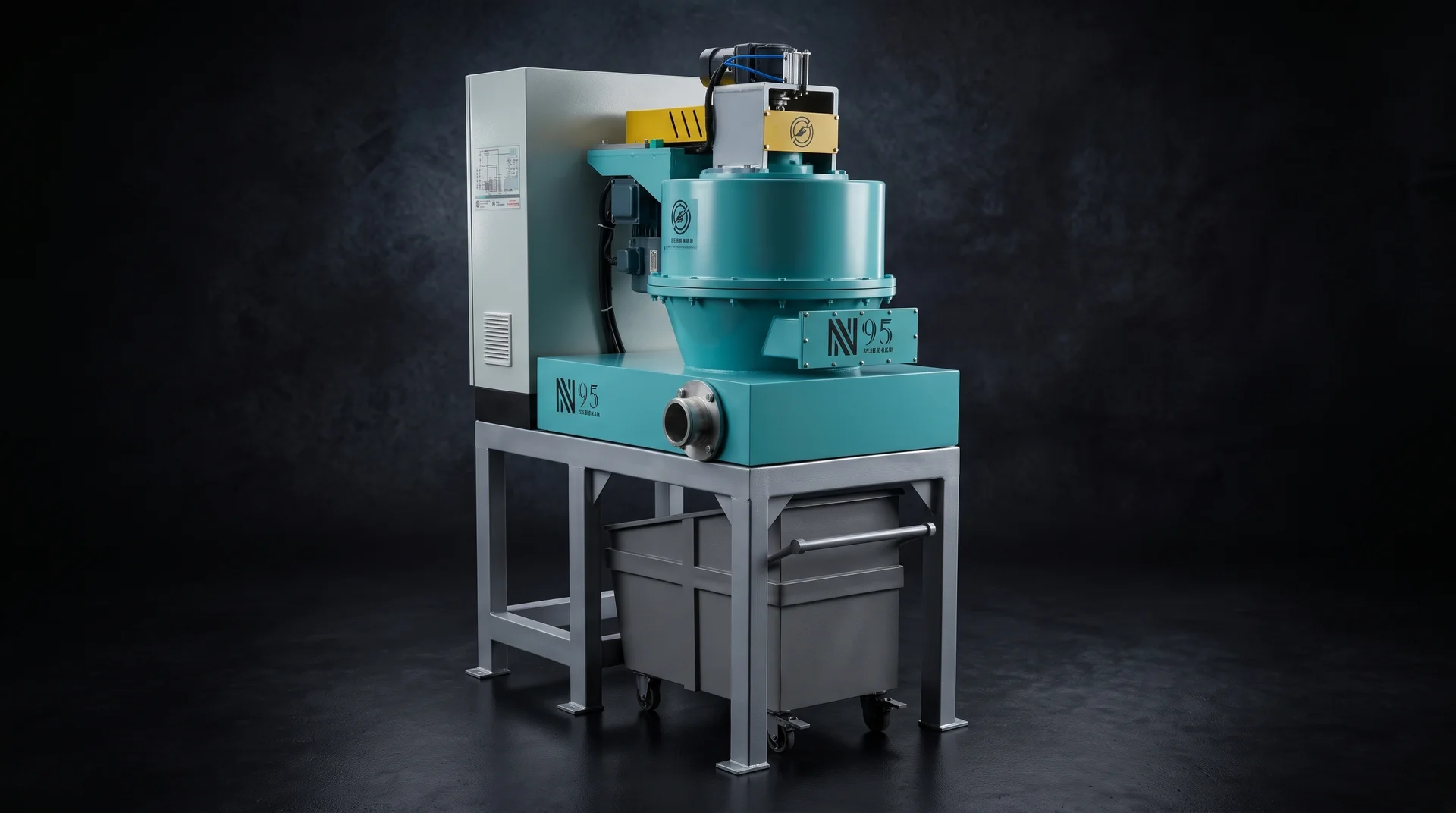
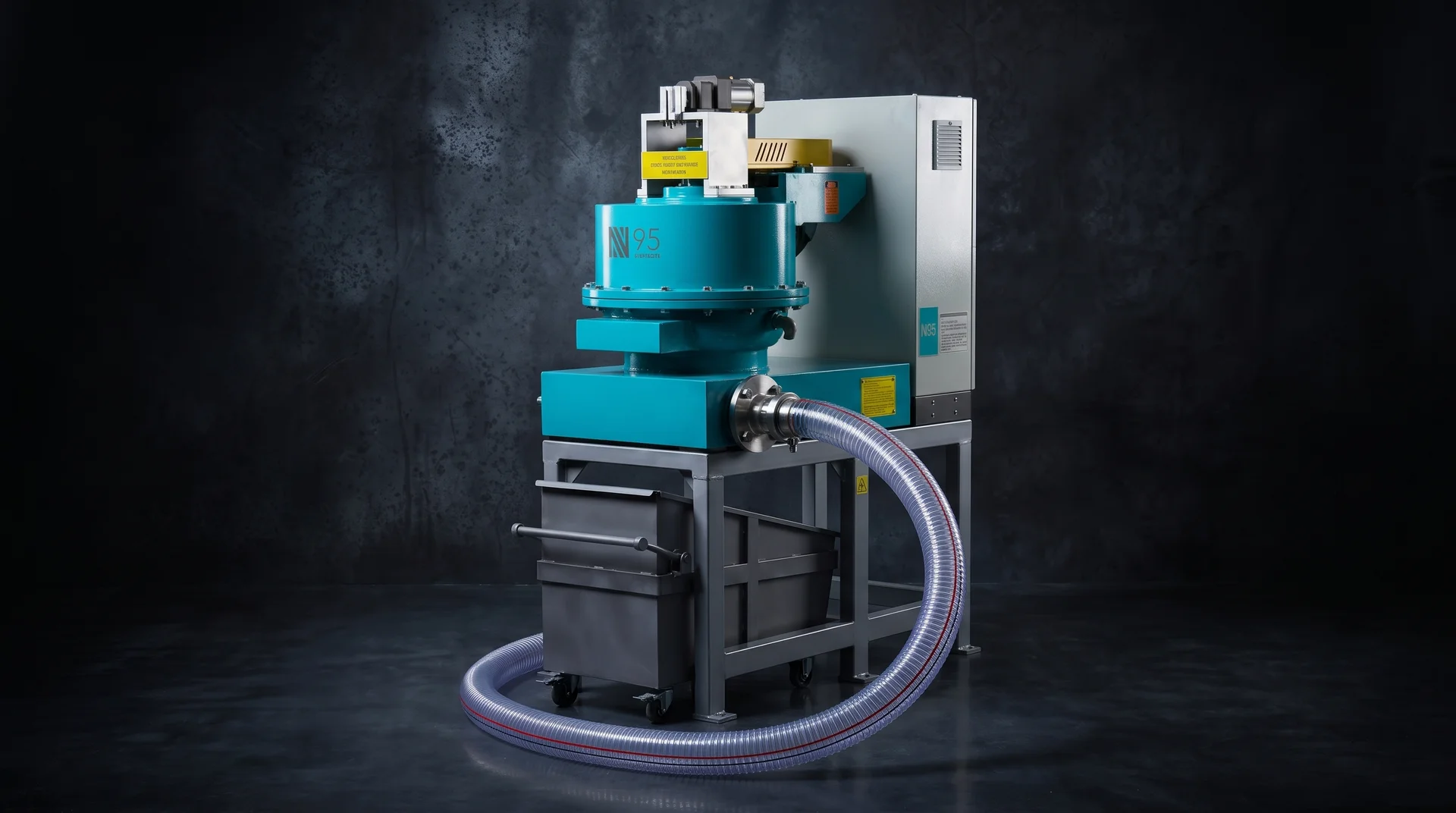
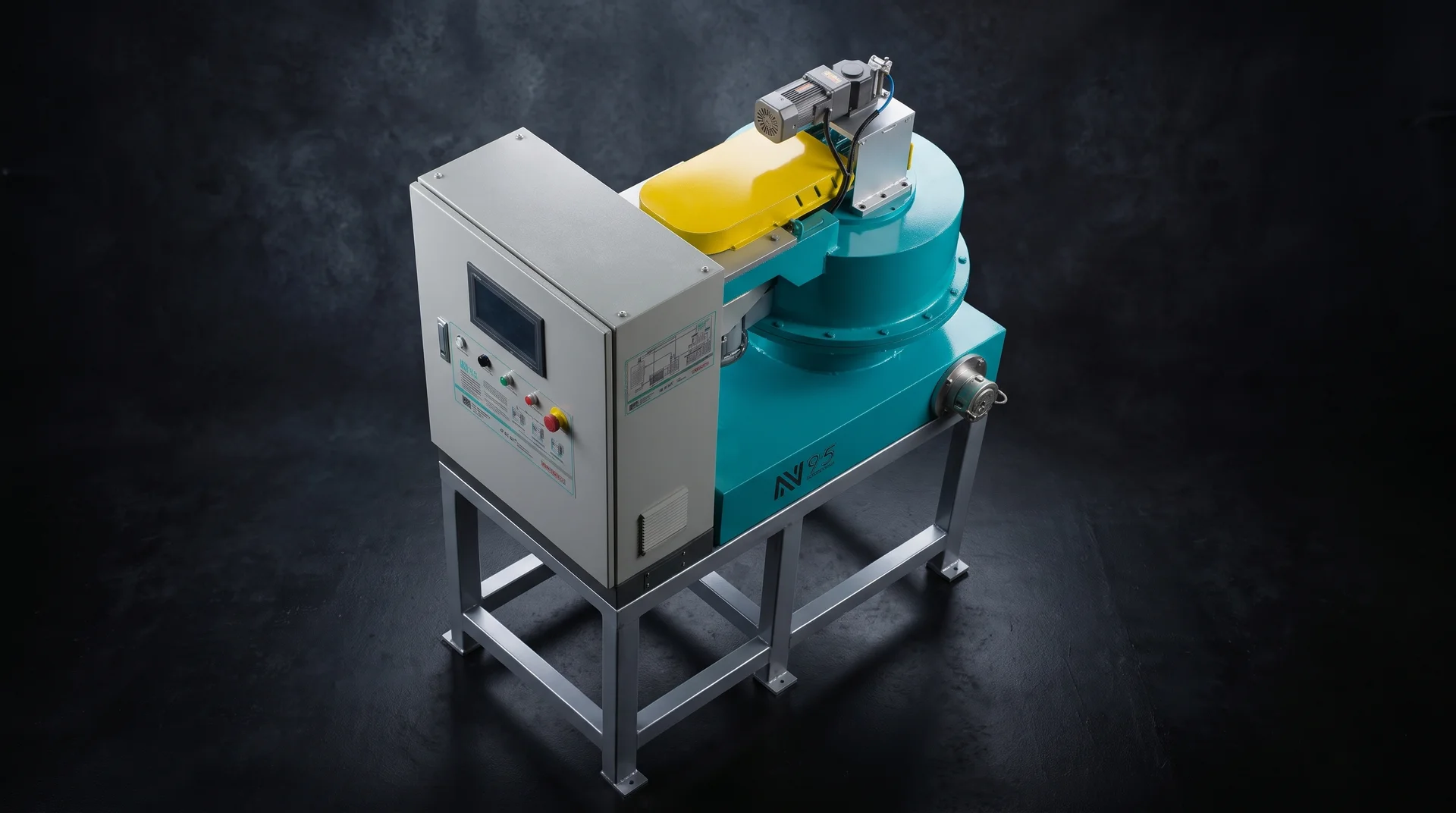
Product view 1 of 4
What the JY-N95 Is Designed to Do
Four design objectives that define the machine — each stated with its limits.
Centrifugal Separation
Separation is driven by density differences between solid particles and the liquid phase under centrifugal acceleration. The rated centrifugal acceleration of the JY-N95 is 2200 G — an acceleration parameter, not a filtration precision.
Automatic Sludge Discharge
The JY-N95 supports automated discharge of separated solids, reducing manual handling in suitable applications. Discharge mechanism details are confirmed with the machine configuration.
Reduced Disposable Filter-Media Consumption
In suitable applications, centrifugal separation can reduce reliance on disposable filter media. The equipment does not eliminate all consumables — electricity, maintenance, spare parts and solid-waste handling still apply.
Process Fluid Reuse
Removing solid contaminants can support process-fluid circulation and reuse. Actual results depend on fluid properties, contaminant characteristics and operating conditions.
Eight Reasons Plants Specify the JY-N95
The manufacturer's core selling points, stated in full. Where the fine end of separation capability is concerned, the site states the boundary rather than a figure: that limit is confirmed by test on the actual fluid.
High-Purity Fluid Cleaning
Solids are removed by density instead of by a filter medium, so the fluid returns to the process without a consumable cartridge in the circuit. How fine that separation reaches is confirmed by test on the actual fluid and is not published as a numeric value.
Fully Automatic Operation
A complete mechanical structure combined with a rigorous program-controlled system delivers fully automatic operation and automatic solids discharge.
Near-Dry Discharged Solids
The separated waste solids are discharged in a near-dry state, which simplifies sludge handling and disposal.
Wide Contaminant Compatibility
Handles solids from hard alloy steel, high-speed steel, aluminium alloy, glass, quartz, ceramics and other machined materials.
Wide Fluid Compatibility
Processes cutting oils, emulsions, lubricating oils and water-based coolants of different compositions and viscosities.
Stable, Media-Free Operation
Centrifugal separation requires no filter media — there are no media elements or consumable cartridges to replace. Scheduled maintenance per the manual still applies.
Large-Flow Centralised Supply
Frequently selected as the separation unit in large-flow centralised coolant supply systems.
Flexible Configuration
Pre-treatment functions, coolant collection tank, pumps, cooling units and control components can be optioned as required to build an optimised system.
Published Specifications
Values published on this page are limited to data confirmed for public release. Unverified parameters are marked, not hidden.
Operating Performance
- Flow Rate
- 25–120 L/min
- Centrifugal Acceleration
- 2200 G
- Motor Power
- 4.0 kW
Electrical & Control
- Power Supply
- 380 V · 50 Hz
- Control System
- PLC — fully automatic
- Automation
- Automatic sludge discharge
Connections & Dimensions
- Inlet
- DN20
- Outlet
- DN100 (4 in)
- Overall Dimensions
- 1370 × 780 × 1815 mm
* Flow rate depends on fluid properties and operating conditions — the maximum is not available for every medium.
† Connection sizes are the standard configuration; confirm them against the order documentation for your machine.
Eight Industry Application Pages
Four application directions where centrifugal separation is commonly considered. Each direction is described with its process conditions and the points that require technical evaluation — applicability is confirmed per application, never assumed.
Tungsten Carbide & Precision Grinding
Centrifugal separation for cemented-carbide grinding coolant: removes non-magnetic carbide and abrasive fines by density, without filter media.
Aluminium Extrusion & Metal Forming Oil
Centrifugal separation for aluminium extrusion lubricant and cold-heading oil: removes fine aluminium, phosphate scale and sludge without filter media.
Waste Oil Regeneration
Centrifugal front-end separation for waste-oil regeneration: removes heavy solids and sludge before membrane and distillation stages.
Optical Glass & Technical Ceramics
Centrifugal separation of optical glass and technical-ceramic grinding fluid: removes fine non-magnetic powder and abrasive without filter media.
Wire Drawing & Metal Processing
Centrifugal separation for wire and tube drawing lubricant: removes copper, aluminium and steel fines by density, without filter media consumption.
Industrial Paint Sludge Separation
Centrifugal compaction of paint sludge from water-curtain spray booths: reduces sludge volume for disposal and returns clearer water to the booth.
Industrial Cleaning & Surface Treatment
Bypass centrifugal purification for cleaning and pretreatment baths: removes sludge and suspended solids while the bath stays in service (confirmed pH 6–9).
Gear Honing & Powder Metallurgy
Centrifugal separation for gear honing, cutting and quench oils, and powder-metallurgy circuits: fine metal and abrasive solids removed without filter media.
How Centrifugal Separation Works
Centrifugal separation uses the rotation of the bowl to create a centrifugal field. Components with different density, size and settling behaviour respond differently to that field, which promotes the separation of solid particles from the liquid under suitable operating conditions.
- Fc
- centrifugal force on the particle
- m
- particle mass
- ω
- angular velocity
- r
- rotation radius
The JY-N95's rated centrifugal acceleration is 2200 G. G is an acceleration parameter — not a filtration precision — and the actual separation result depends on particle density and size, liquid viscosity, flow rate and machine geometry.
Watch the JY-N95 in operation
The working-principle page hosts the JY-N95 video — the natural context for seeing the machine run.
Built by Jingyuan
Shenyang Jingyuan Membrane Systems Co., Ltd. was established in 2010 and operates its own manufacturing facility in Tieling, Liaoning Province, China. The company's manufacturing base covers polymer research and development, sintering, metalworking, piping, electrical assembly, quality inspection and shipping, and supports OEM/ODM manufacturing. Component sourcing and assembly scope for the JY-N95 are confirmed with each order.
Technical support is provided remotely — by email, WhatsApp and video, with the machine documentation as the reference. Support is remote only; on-site attendance is not part of the service scope.
Questions Buyers Ask Before Specifying
Six answers taken from the site-wide FAQ and reproduced word for word — not summarised for this page.
How do I know whether the JY-N95 suits my fluid?
Three characteristics decide most of it: the density difference between solid and liquid, the particle size band, and the solids loading. The guidance published on this site is a density difference of about 0.1 g/cm³ or more, solids in the single-digit micron range and above, and roughly 1–50 % suspended solids by weight. These describe the feed material the process can accept — they are not a separation rating of the machine. The answer for your plant comes from evaluating your own fluid data, and where the fine end matters, from a test on the actual fluid.
What density difference does centrifugal separation need?
The driving force is the difference in density between the solid and the liquid — not particle size alone. Around 0.1 g/cm³ or more is the recommended working range. Below roughly 0.05 g/cm³ the settling rate falls away sharply and throughput has to be traded off; solids that sit close to the fluid density may need a different technology altogether.
Is 2200 G a filtration rating?
No. 2200 G is the rated centrifugal acceleration — an acceleration parameter. It is not a micron rating and cannot be converted into one, because the result also depends on particle density and size, liquid viscosity, residence time and machine geometry. A G value and a filtration precision are different quantities and are not interchangeable.
How are separated solids discharged?
Automatically. The JY-N95 is an automatic-discharge machine, which is what allows it to run continuously without stopping for manual bowl cleaning. The discharge mechanism and cycle details are confirmed with the machine configuration and the documentation supplied at order stage.
Does the machine use filter media or consumable cartridges?
No. The JY-N95 separates by centrifugal force and requires no filter media — there are no media elements or cartridges to replace. Electricity, scheduled maintenance, spare parts and solid-waste handling still apply.
How do I get a quotation?
Send your application data through the inquiry form, or by email or WhatsApp. A quotation follows an engineering review of the fluid and duty: model confirmation, configuration, scope of supply and commercial terms. We reply within 24 hours and aim to return a proposal within three working days of receiving usable data.
Is the JY-N95 Suitable for Your Process?
Share your fluid type, operating conditions and separation objectives. Our team can review the application requirements and discuss the suitability of the JY-N95.