
JY-N95 Automatic Centrifugal Separator
Automatic centrifugal separation with automated solids discharge — specifications, operating conditions and application scope.
Product Positioning
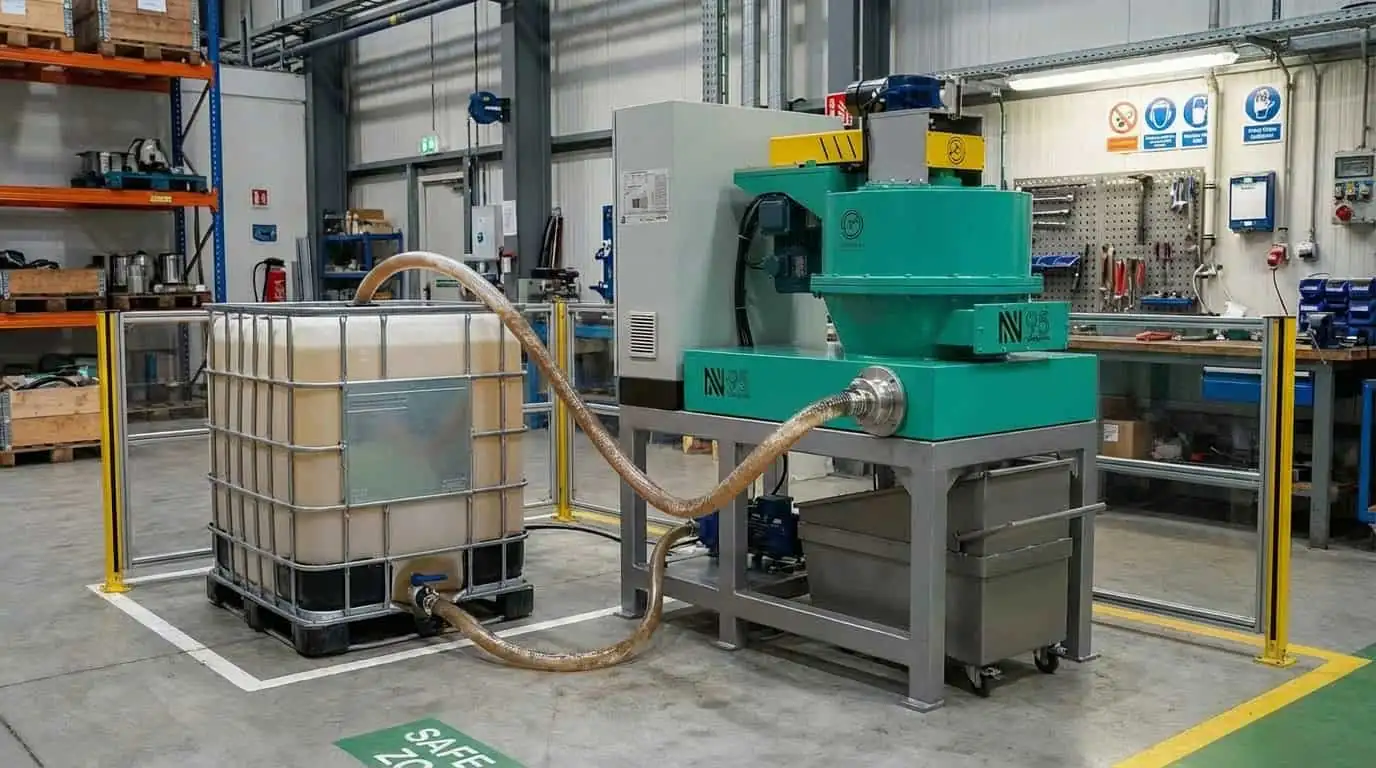
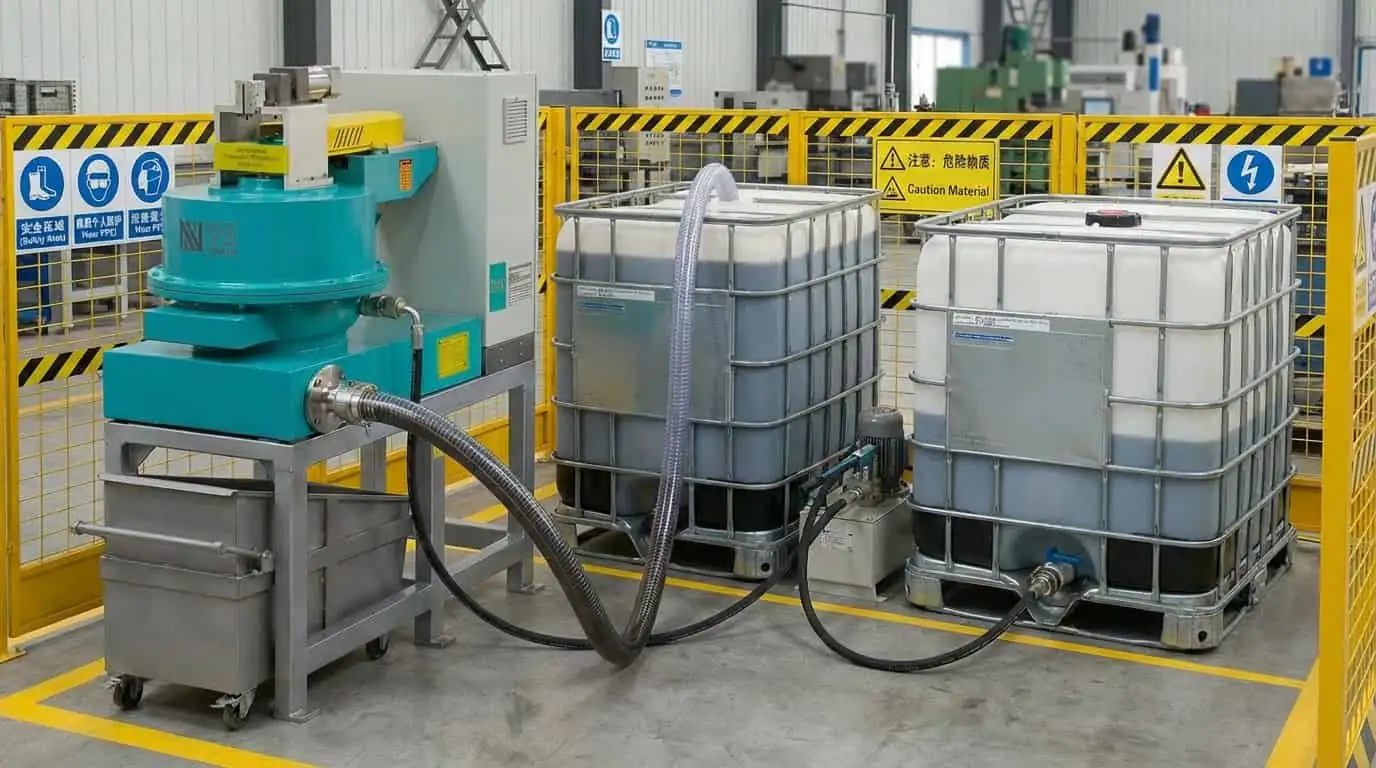
The JY-N95 is an automatic centrifugal separator designed for industrial process-fluid treatment. It combines centrifugal separation with automated solids discharge to support fluid-cleaning and recovery processes in suitable applications.
The JY-N95 is a centrifugal separator. It is not a membrane filtration device: nominal pore sizes, beta ratios and gas-pulse regeneration parameters of Jingyuan membrane products must not be applied to it.
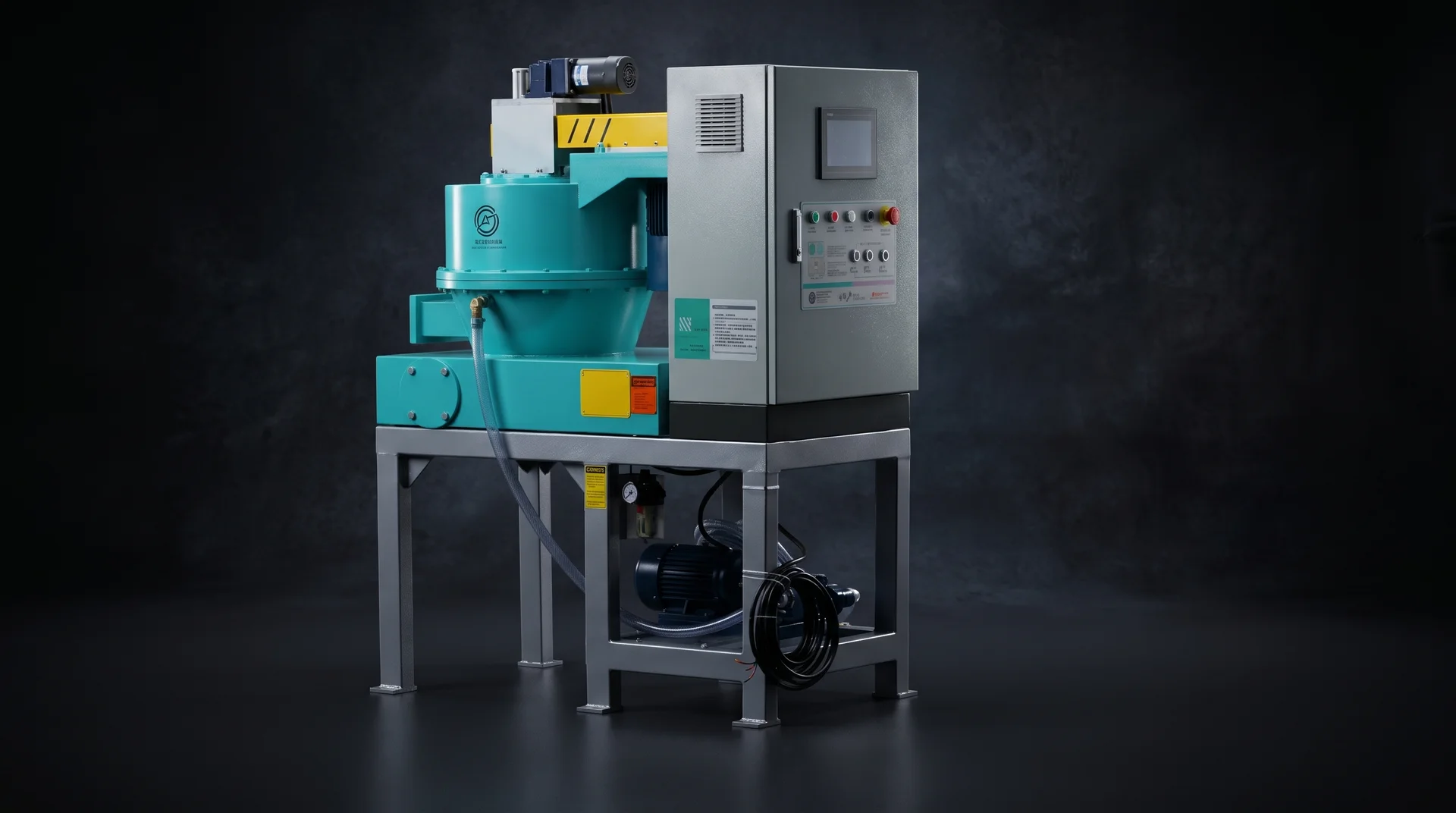
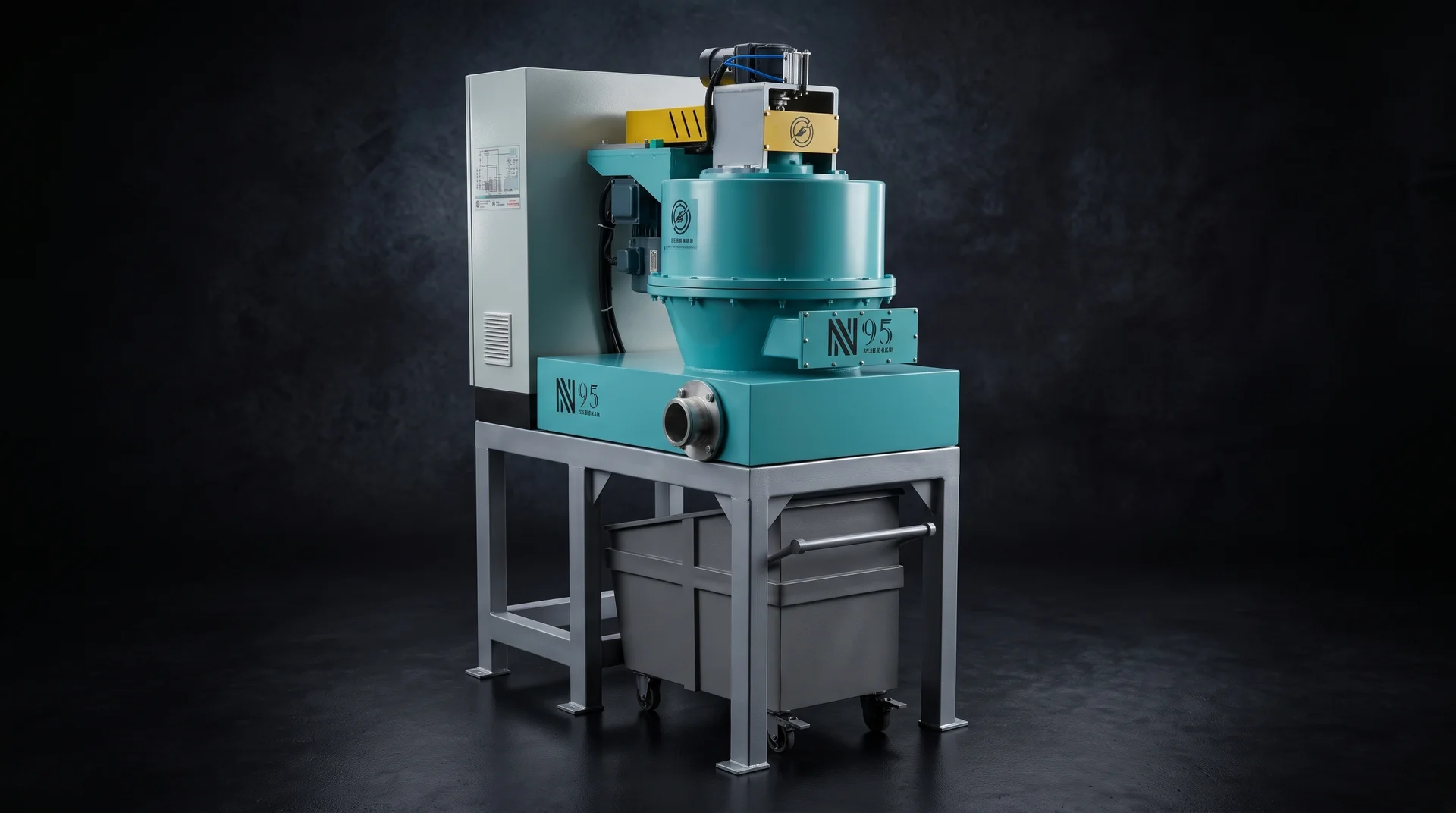
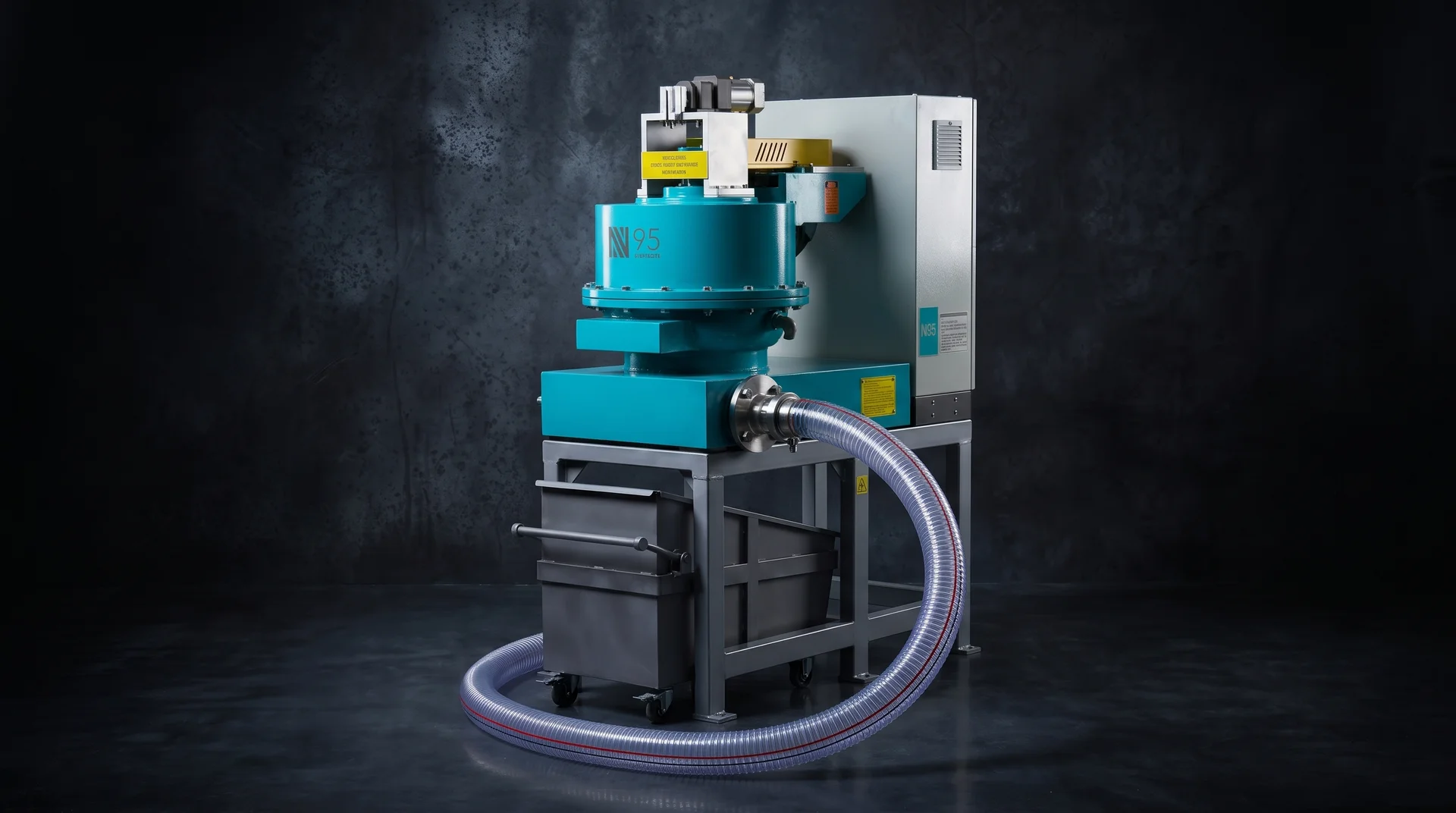
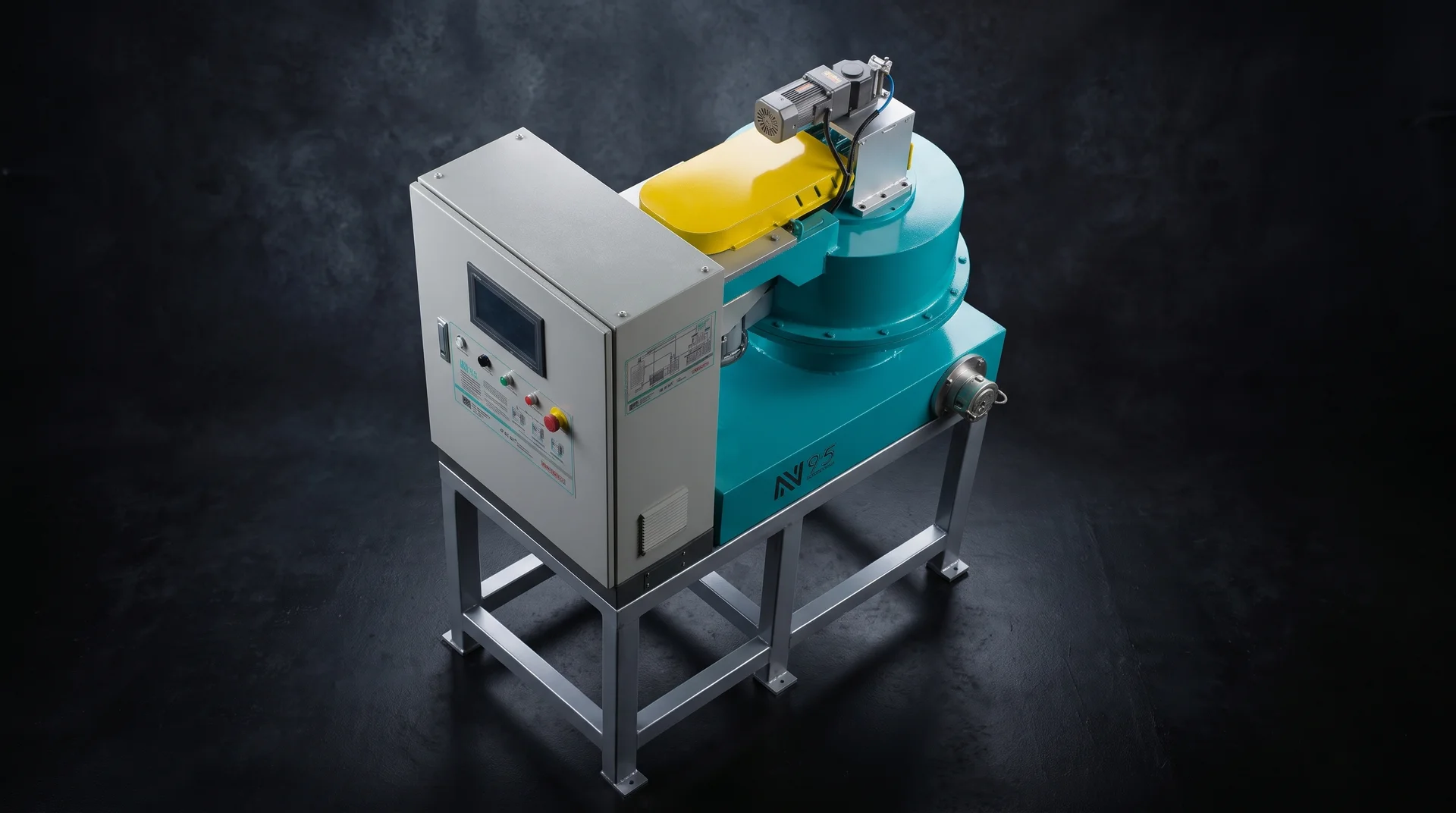
Product view 1 of 4
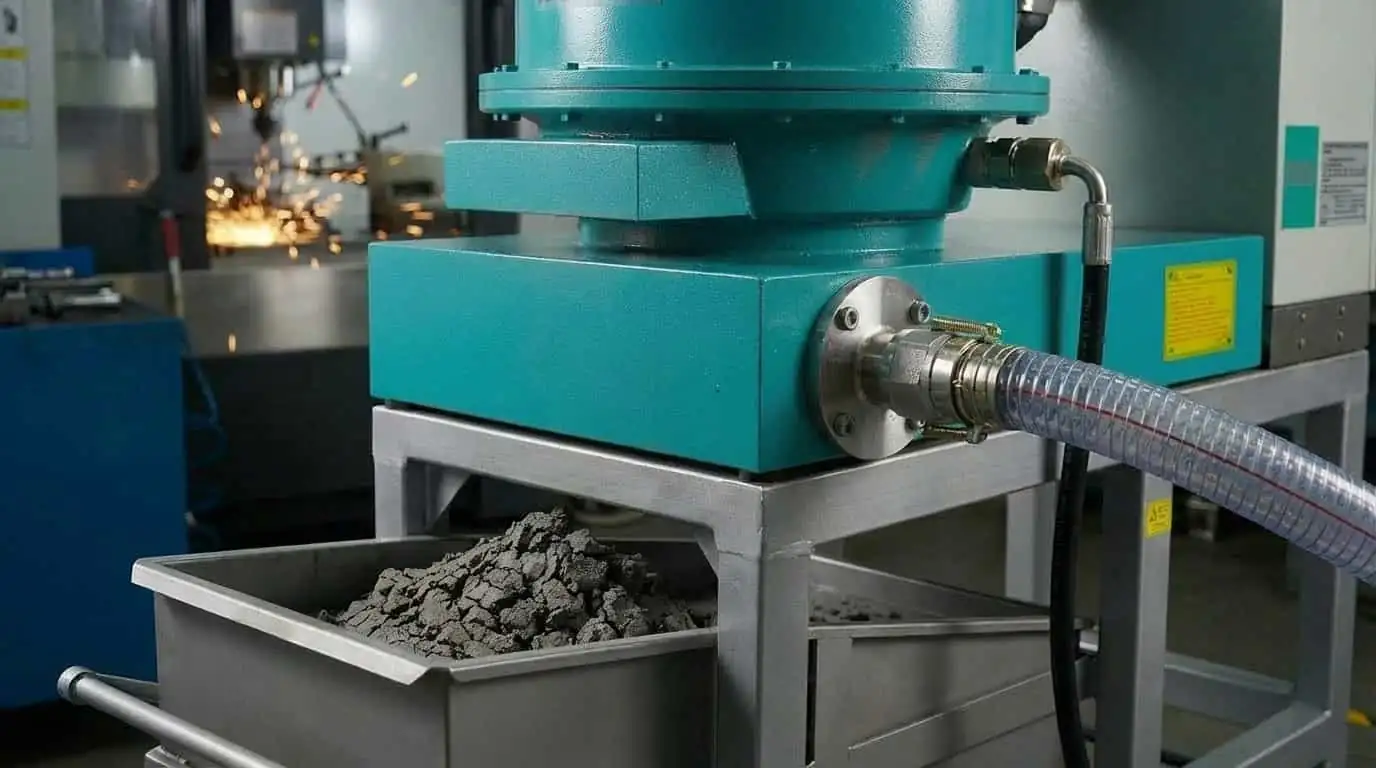
The JY-N95 in the Workshop
How the JY-N95 Separates
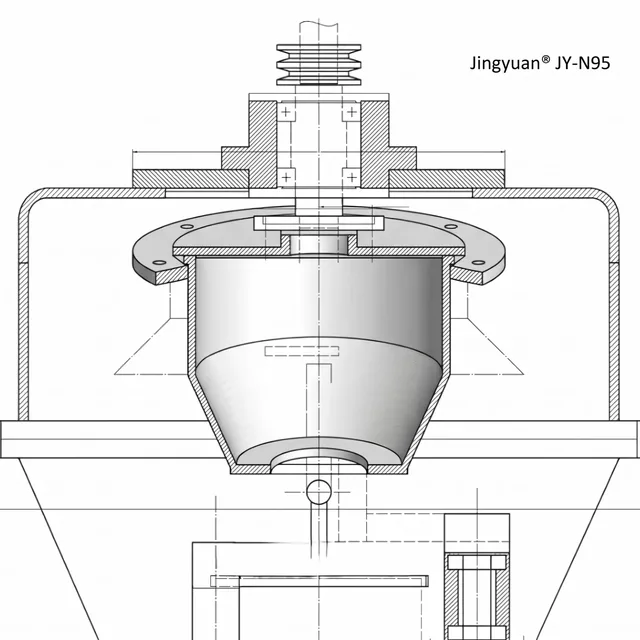
Centrifugal separation uses the rotation of the bowl to create a centrifugal field. Components with different density, size and settling behaviour respond differently to that field, which promotes the separation of solid particles from the liquid under suitable operating conditions.
Under the centrifugal field, denser solid particles migrate outward and concentrate, while the liquid phase is returned to the process. The rated centrifugal acceleration is 2200 G; G is not a filtration precision, and separation results depend on particle density and size, liquid viscosity, flow rate and machine geometry.
The video shows the JY-N95 automatic centrifugal separator in operation. It is placed on this page because the working principle is the natural context for understanding the machine.
Video source: Jingyuan's published product video on YouTube. The player loads only after the visitor presses play.
What the Machine Does
Centrifugal Separation
Density-driven solid-liquid separation under a centrifugal field. The rated centrifugal acceleration is 2200 G — an acceleration parameter, not a filtration precision.
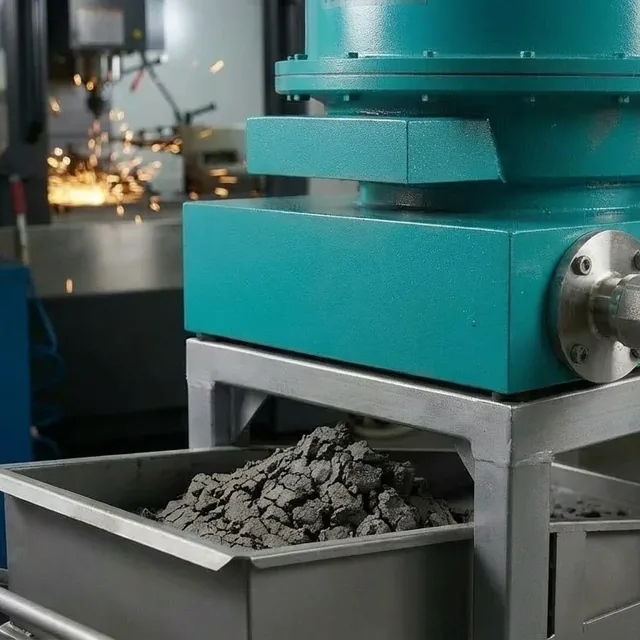
Automatic Solids Discharge
Separated solids are discharged automatically, reducing manual handling. Discharge mechanism details are confirmed with the machine configuration.
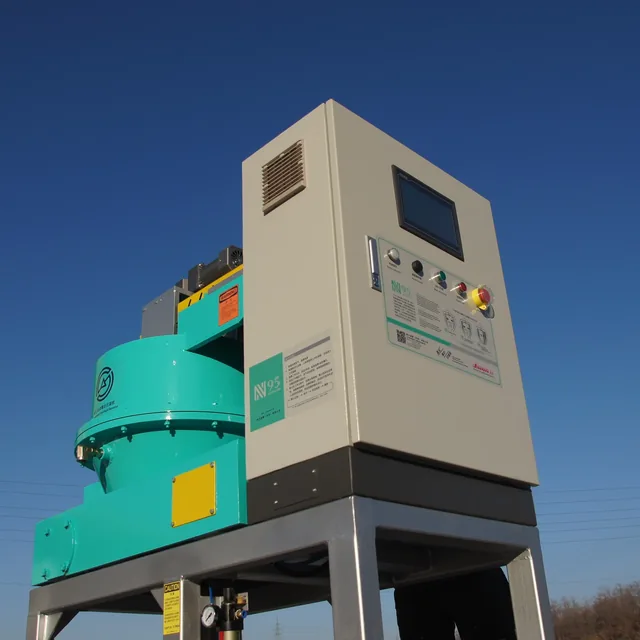
PLC Fully Automatic Control
A PLC controls the operating cycle automatically. Brand options and connectivity are confirmed per order — see the technical parameters.
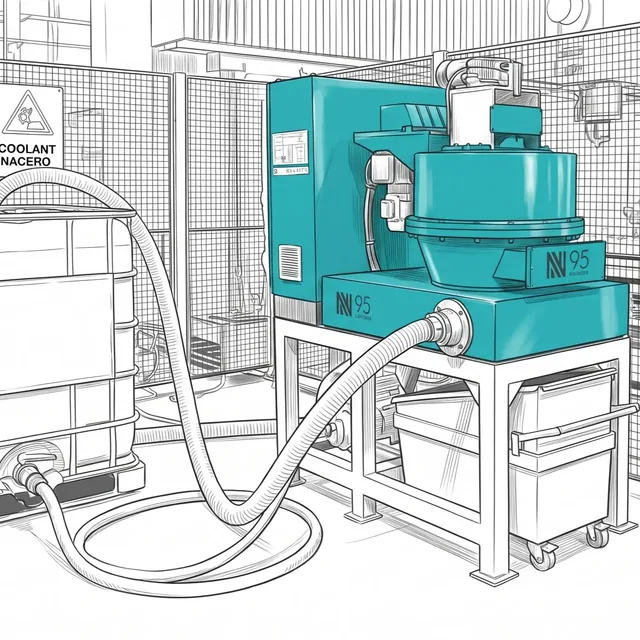
Process-Fluid Circulation Support
By removing solid contaminants, the machine can support fluid circulation and reuse in suitable applications. Results depend on fluid properties and operating conditions.
Eight Core Advantages
The manufacturer's stated advantages. The separation capability is described by its boundary, not by a precision figure.
High-Purity Fluid Cleaning
Solids are removed by density instead of by a filter medium, so the fluid returns to the process without a consumable cartridge in the circuit. How fine that separation reaches is confirmed by test on the actual fluid and is not published as a numeric value.
Fully Automatic Operation
A complete mechanical structure combined with a rigorous program-controlled system delivers fully automatic operation and automatic solids discharge.
Near-Dry Discharged Solids
The separated waste solids are discharged in a near-dry state, which simplifies sludge handling and disposal.
Wide Contaminant Compatibility
Handles solids from hard alloy steel, high-speed steel, aluminium alloy, glass, quartz, ceramics and other machined materials.
Wide Fluid Compatibility
Processes cutting oils, emulsions, lubricating oils and water-based coolants of different compositions and viscosities.
Stable, Media-Free Operation
Centrifugal separation requires no filter media — there are no media elements or consumable cartridges to replace. Scheduled maintenance per the manual still applies.
Large-Flow Centralised Supply
Frequently selected as the separation unit in large-flow centralised coolant supply systems.
Flexible Configuration
Pre-treatment functions, coolant collection tank, pumps, cooling units and control components can be optioned as required to build an optimised system.
Full Specification Table
| Product model | JY-N95 |
|---|---|
| Equipment type | Automatic centrifugal separator |
| Flow rate | 25–120 L/min Depends on fluid properties and operating conditions — the maximum rate is not available for every medium. |
| Centrifugal acceleration | 2200 G An acceleration parameter — not a filtration precision. |
| Power supply | 380 V, 50 Hz |
| Motor power | 4.0 kW |
| Control system | PLC, fully automatic PLC brand options: SIEMENS / ABB / SCHNEIDER — optional configurations, confirmed per order. |
| Solids discharge | Automatic |
| Overall dimensions | 1370 × 780 × 1815 mm |
| Inlet connection | DN20 Standard configuration; confirm against order documentation. |
| Outlet connection | DN100 (4 in) Standard configuration; confirm against order documentation. |
| pH range | 6–9 Applicability confirmed per fluid chemistry — not a universal compatibility statement. |
| Operating design | Continuous 24-hour operation design Design intent; duty cycle and maintenance interval confirmed with the configuration. |
All values are taken from the JY-N95 technical data sheet maintained by Jingyuan engineering. Flow-rate conditions apply as noted.
Suitable Fluids and Feed Materials
Centrifugal separation is density-driven, so the feed material — not the machine alone — decides whether a duty fits. Three characteristics carry most of that decision.
| Solids particle size | Fine solids — single-digit microns and above Settling velocity rises with the square of particle diameter and with the centrifugal acceleration applied, so the low-micron fines that blind filter paper settle within a single pass at 2,200 G. Separators in the same 2,000–2,500 G class report fine-end performance in the single-digit micron range. Solids below roughly one micron settle too slowly to be removed economically in one pass; where they matter, flocculant dosing in the pre-treatment step agglomerates them into a separable size. |
|---|---|
| Density difference (solid − liquid) | ≥ 0.1 g/cm³ recommended The driving force is the density difference, not particle size alone. Below roughly 0.1 g/cm³ the settling rate falls away sharply and throughput has to be traded off; solids whose density is close to the fluid may need a different technology. |
| Solids loading | Approx. 1–50 % suspended solids by weight The wide band is handled by setting the discharge cycle to the load. Light loading at the lower end mainly calls for a smaller unit or a batch arrangement; heavy loading at the upper end is normally buffered upstream. |
Fluids accepted in principle
Liquids with a density difference between the solid and liquid phases that can be processed by centrifugation — including certain water-based or oil-based industrial fluids. Applicability to a specific fluid must be verified by our engineering team before any commitment is made.
Requires evaluation before use
- Liquids with no meaningful density difference between phases
- Stable emulsions that cannot be broken under the machine's operating conditions
- High-viscosity media, until flow behaviour has been evaluated
- Media with special chemistry, until material compatibility is confirmed
- Applications requiring removal of dissolved substances
Application evaluation
Suitability is confirmed per application after engineering review of the fluid, contaminant and operating data — never assumed from the parameter table alone.
Compatibility and Conditions
| Power supply | 380 V, 50 Hz |
|---|---|
| Motor power | 4.0 kW |
| pH range | 6–9 Applicability confirmed per fluid chemistry — not a universal compatibility statement. |
| Flow rate | 25–120 L/min Depends on fluid properties and operating conditions. |
Footprint and Connections
| Overall dimensions | 1370 × 780 × 1815 mm |
|---|---|
| Inlet connection | DN20 Standard configuration; confirm against order documentation. |
| Outlet connection | DN100 (4 in) Standard configuration; confirm against order documentation. |
Foundation, levelling, piping and electrical requirements are confirmed with the order documentation for each configuration.
Solids Handling and Upkeep
Automatic discharge
The JY-N95 discharges separated solids automatically, reducing manual handling in suitable applications. The internal discharge mechanism, cycle timing and buffer behaviour are confirmed with the machine configuration.
Maintenance
Maintenance scope and intervals are confirmed with the machine configuration and the documentation supplied at order stage. The machine is designed to reduce disposable filter-media consumption in suitable applications — it does not eliminate power, maintenance, spare-part or solid-waste costs.
Discharge handling
Separated solids are collected for disposal or further processing. Containerisation and handling arrangements are part of the application evaluation.
Frequently Asked Questions
What is an automatic centrifugal separator?
How does centrifugal separation work?
What types of industrial fluids can the JY-N95 handle?
What is the flow rate of the JY-N95?
Does the JY-N95 require disposable filter media?
How is sludge discharged?
Can the JY-N95 handle my grinding fluid?
What information is needed to evaluate an application?
How can I request technical information or a quotation?
All 26 questions — applicability, sizing, maintenance, commercial terms