
Technical Resources
Engineering articles on centrifugal separation for industrial fluids — written for people evaluating equipment, not for search engines.
Three articles, each written to be read before a separator is specified. They cover the physical principle that decides whether centrifugal separation applies at all, the factors worth comparing against a bag or cartridge filter, and the fluid and solids data an application evaluation needs before suitability can be confirmed at all.
They are deliberately written without performance figures. Separation results follow the fluid: particle size and density, viscosity, temperature, solids loading and residence time all move the outcome, so a number quoted for one plant would mislead the next. Where a question needs test evidence the site does not have, the article says so and names the test instead of quoting a figure.
Three Engineering Articles
Each article stands on its own. Read them in order if you are starting from zero, or go straight to the one that matches the decision in front of you.
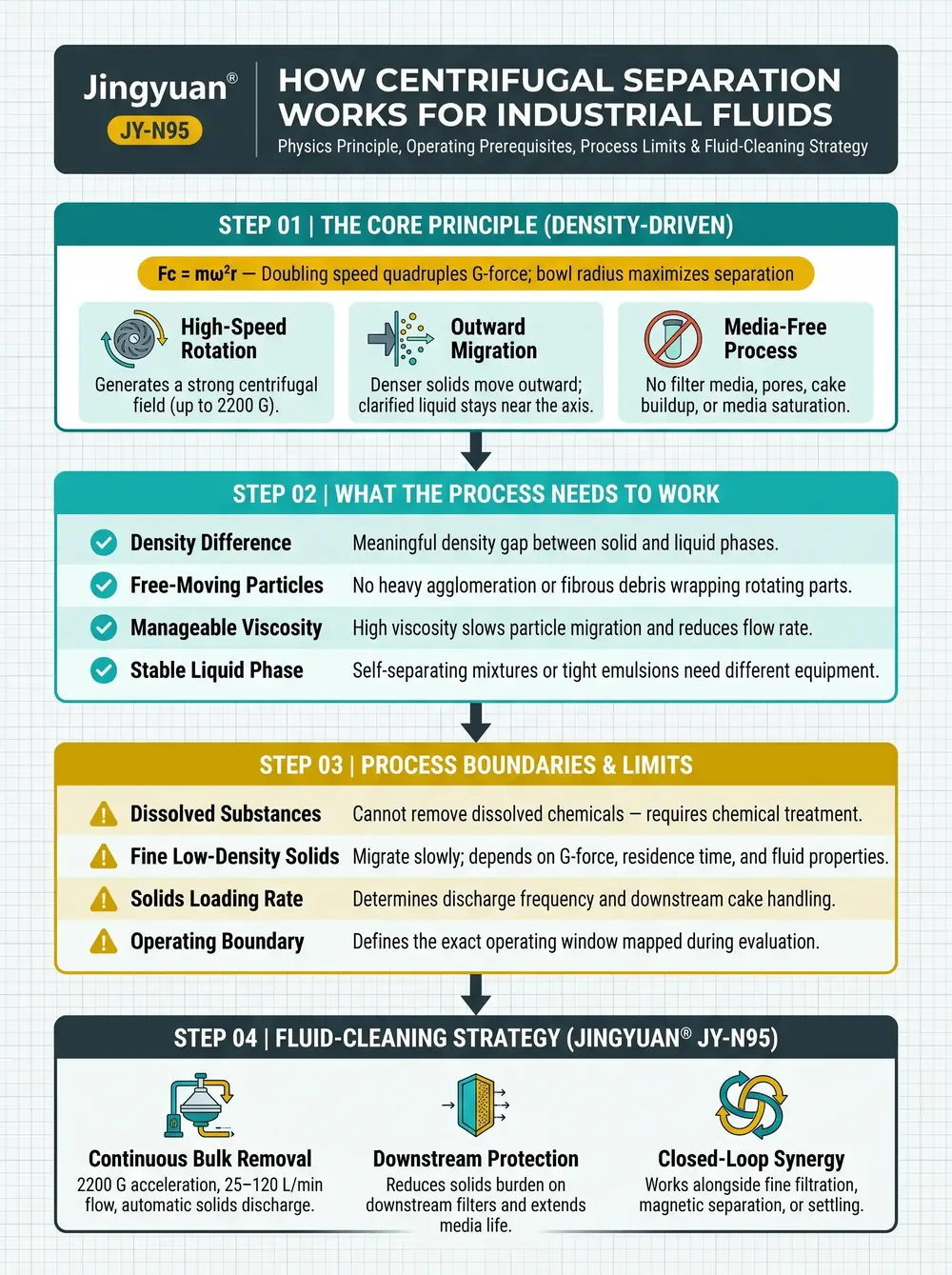
How Centrifugal Separation Works for Industrial Fluids
Centrifugal separation for industrial fluid cleaning: the physical principle, what it needs to work, and its main limits — without performance claims.
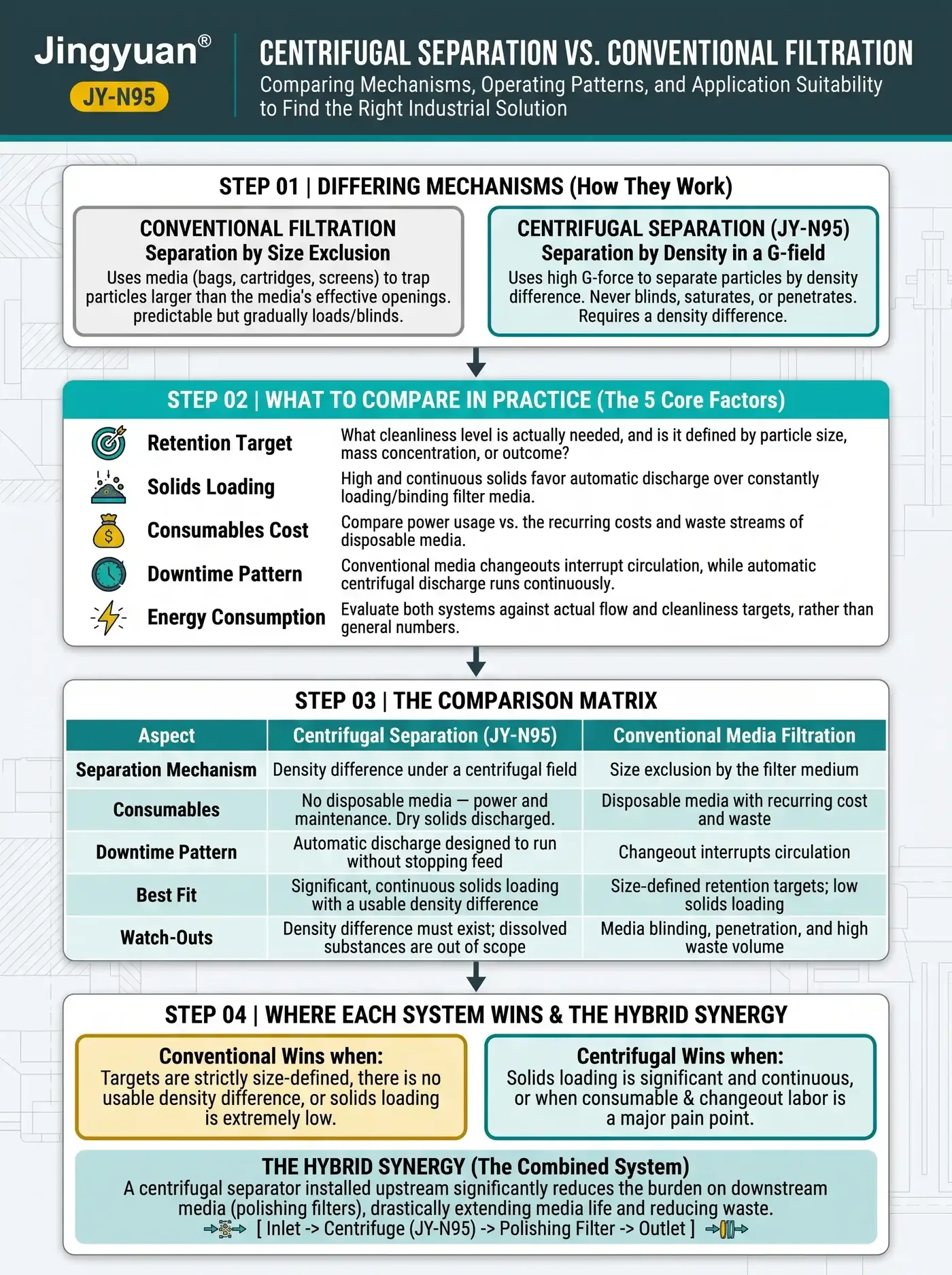
Centrifugal Separation vs. Conventional Filtration: What Should You Compare?
Centrifugal separation vs. conventional filtration for industrial fluids: an honest comparison of principles, consumables, maintenance, energy and applications.
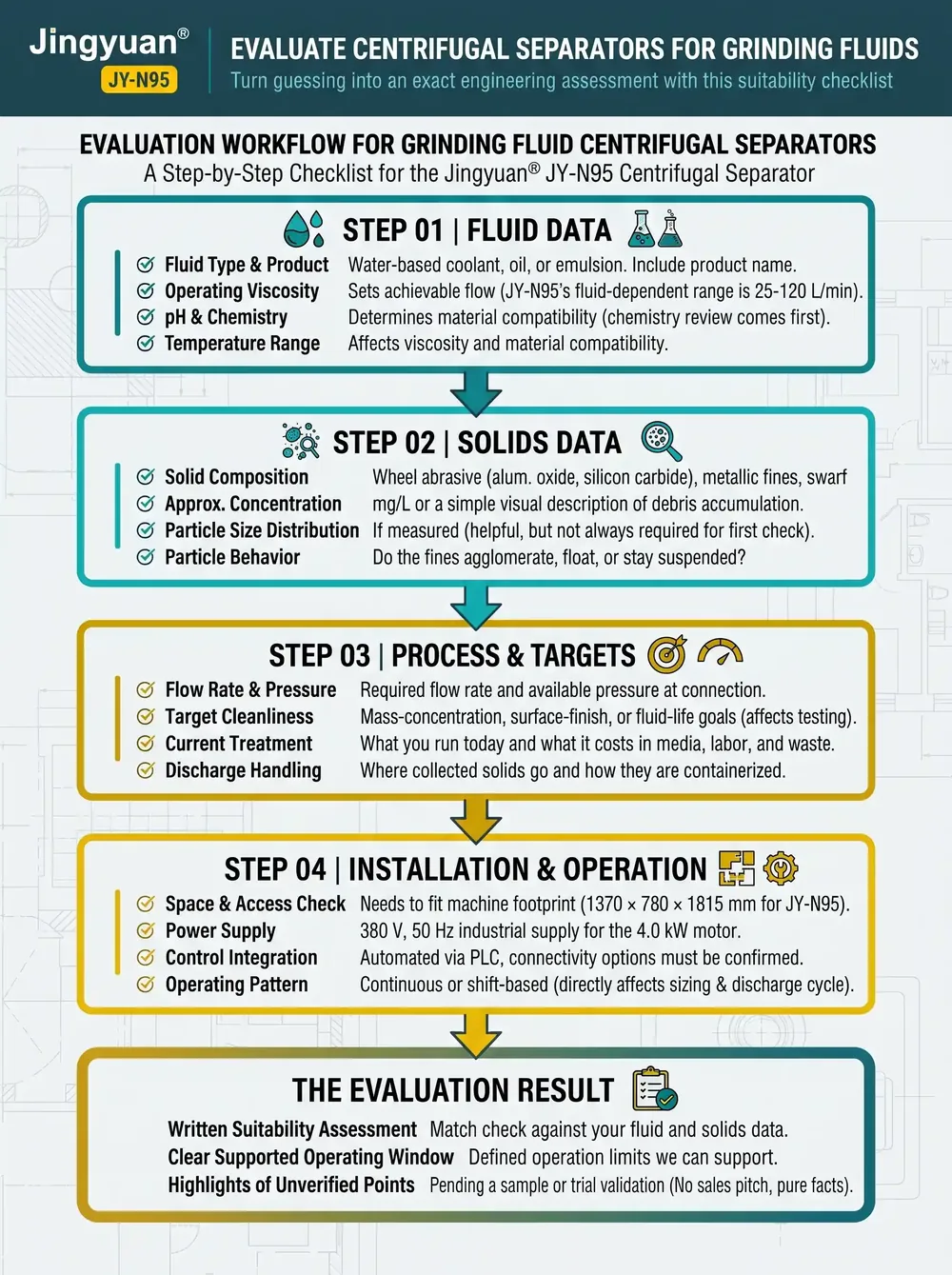
Evaluate Centrifugal Separators for Grinding Fluids
A practical checklist for evaluating a centrifugal separator for grinding fluids: fluid data, solids data, flow, targets and installation constraints.
Need an Answer That Is Not Here?
Ask our engineering team directly — the inquiry form routes technical questions to the right engineer.